The Odyssey
Odyssey: The Greek Myths Reimagined by Stephen Fry
If we humans, Prometheus's creations, controlled fire, Zeus feared we wouldn't need gods to worship and obey; we could abolish our own creators. Zeus was right. We did. And we are Zeus now.
We fear the entities we have created...humanity could become a mythic memory, an origin story for the machines to tell themselves, while we crumble into broken statuary alongside Zeus and his pantheon before us. Yes, the Greeks got there before us. But that is because the Greeks were before us, and, after all, the Greeks were us.
I love stories of adventures and searching for home. Lord of the Rings, The Hobbit, even Star Trek Voyager are tales of people going out on wonderful adventures but ultimately finding home again.
The Odyssey, the classic poem written by Homer (who may or may not have existed, likely a collection of storytellers), is one of the first known stories about a man overcoming obstacles and challenges to find his way home after more than twenty years away. It also describes a society that is transitioning away from gods, monsters and worship, and moving towards a focus on human affairs, human justice and the importance of civilization over the mythical world.
I've tried to read the original poem, but I'm not a lit major, so I always struggled with it.
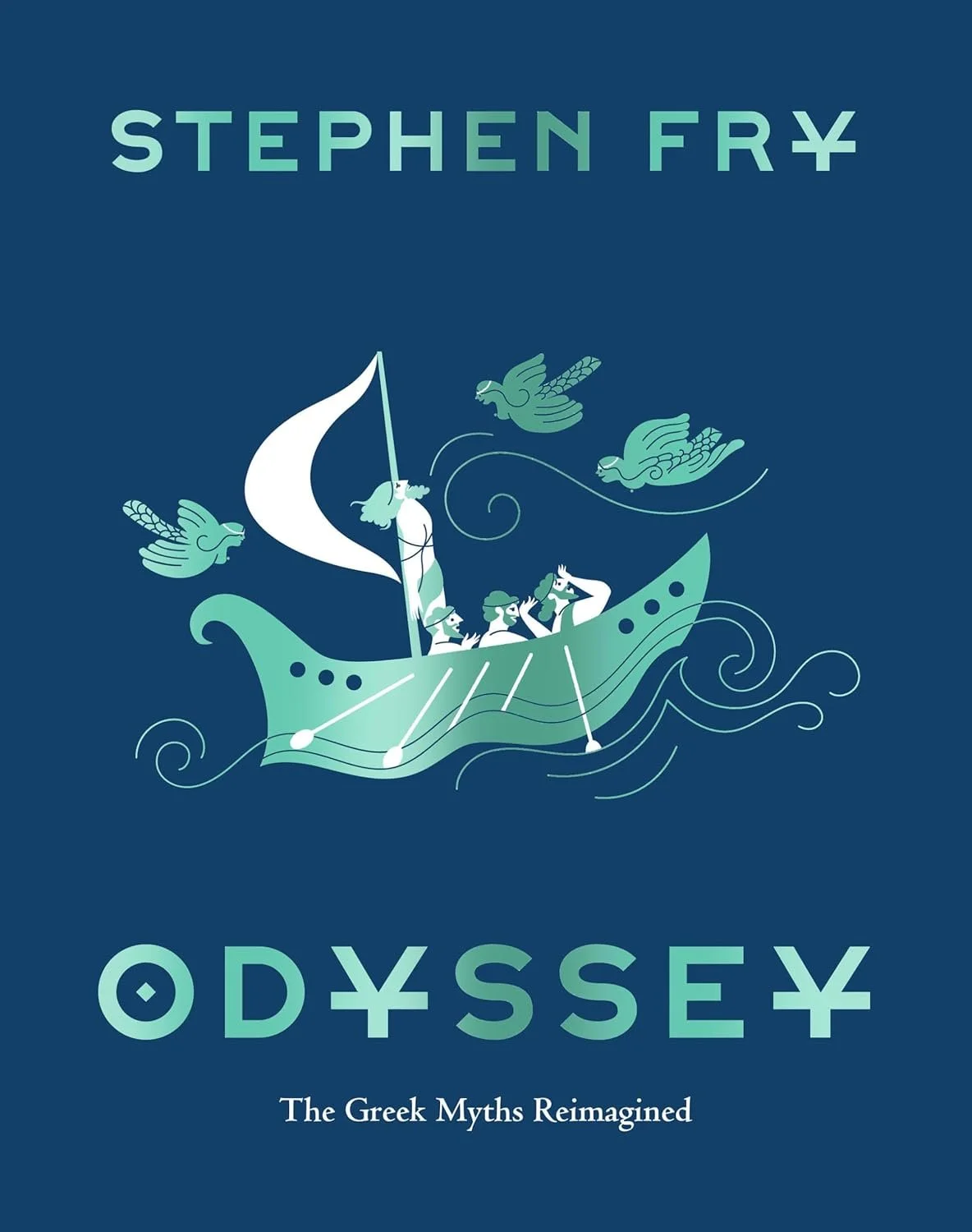
Stephen Fry has been retelling Greek myths in a more accessible and modern way in a series of beautiful books. The Odyssey is his latest, focused on Odysseus finding his way back to Ithaca after the Trojan War. It's a wonderful book, and I love the design and art. Fry finds the humor and wit in these stories and brings out the complexity of these characters. Nothing is black and white, and the "heroes" and "gods" are often flawed.
I highly recommend this if you're fascinated by ancient myths and want to enjoy them for the wonderful stories they are, understand the characters and metaphors, and get a good introduction to the Greek wisdom that still echoes in our world today.