“Good enough” change management for Microsoft 365 and AI projects
Perfect can be the enemy of "good enough", especially when it comes to change management.
On Microsoft 365 (M365) and AI rollouts it’s common to see no change management, or it gets pushed to the very end of the project timeline. Budgets don't usually include a dedicated change role, so it becomes a "side of the desk" activity for someone already juggling other responsibilities. Then, a few weeks before go-live, someone realizes they should probably do some training, so they squeeze in a few sessions and hope for the best.
Meanwhile, employees are passively resisting. They nod along in training sessions and say they'll use the new tools, but then quietly return to their old habits because it seems faster to send files in email, or use nested folders, or work around systems that could actually make their lives easier. Why? Because no one has really explained why it's worth changing or shown them the value.
Change management should be simple…right?
Change management is more than last-minute training. The steps sound straightforward:
Define a clear vision
Secure leadership support
Train your people, and
Keep reinforcing the message while addressing concerns.
Seems simple right? But simple does not mean easy! Doing this day in and day out, across departments and through inevitable setbacks? That's where the real work begins.
Why change management matters
The data is compelling. Organizations with effective change management are seven times more likely to meet their project objectives. That's not a marginal improvement. It's the difference between a tool that transforms how people work and an expensive digital shelf where good intentions go to die.
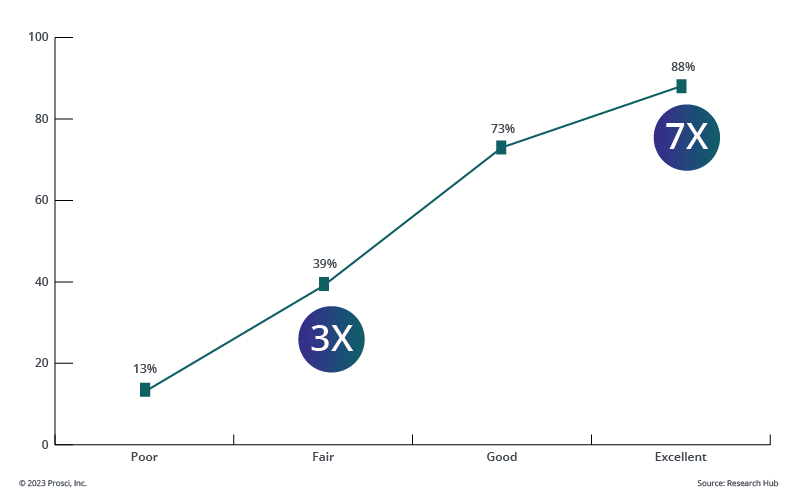
From: How To Be a Successful Digital Transformation Leader, Prosci Research
This research comes from Prosci, a leading organization in change management research. While they do sell change management related products, their data collection is rigorous and represents one of the most comprehensive bodies of work on what actually drives project success.
One of the keys here is that you don't have to get to 7x, perfect project success. Even a 3x improvement in project success is a win! If you do some change management, that's still better than none.
The "Swiss Cheese" future state
Without adequate change management, even successful technical deployments result in what I've heard called a "Swiss cheese" future state. The platform is there, the features work, but the actual usage (future state) is full of holes:
Teams channels sit empty while email continues to overflow
SharePoint sites exist but people still save files locally
Records management is an after thought, meaning it’s not widely adopted
Collaboration and AI features go unused because the old ways feel safer
Training investments deliver minimal behavior change
This isn't a complete failure, but without adequate change management it's a future state riddled with lost opportunities, diminished ROI, and fewer actual improvements.
Now let’s look at what “good enough” change management might look like.
The point I want to make in this post is that if you can only do one Change Management activity, make it active and visible executive sponsorship. Everything else in change management is secondary to getting your leaders on board and publicly championing the change.
Leadership can predict project success
Here's my litmus test for any M365, SharePoint or AI project: Who is talking to staff about the rollout?
If it's primarily the change lead or project manager standing up in town halls and employee meetings, I know the initiative faces an uphill battle. Not because these professionals aren't capable—they absolutely are—but because they're in the wrong role for that particular task.
A change lead works with and through others. It's fundamentally a "lead from behind" position. The managers and senior leaders drawing six-figure salaries need to be the visible champions of these initiatives.
The research backs this up too. People want to hear from the CEO, executives, and especially their direct manager or supervisor about a change. Prosci finds in their research, year after year, that active and visible executive sponsorship is the single strongest predictor of project success.
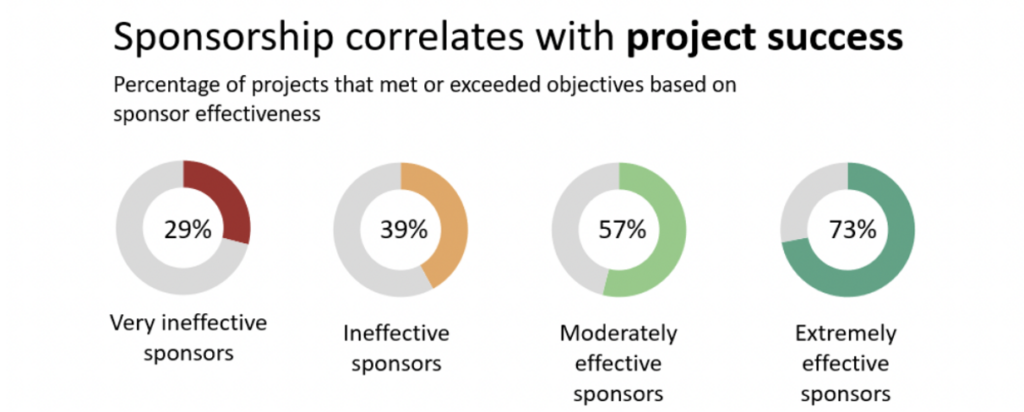
Source: Prosci Research Hub
When senior leadership can't or won't publicly advocate for why a change matters, you're essentially asking everyone else to care more than the people at the top do.
What good enough looks like for M365 and AI
In the context of Microsoft 365 and AI implementations, "good enough" change management focuses on the fundamentals that move the needle the most.
Get your messaging right, from the right people
Different audiences need to hear different things from different voices. When introducing SharePoint or records management or AI capabilities, employees want to hear the strategic "why" from business leaders—the CEO, VPs, and executives who articulate how this fits into the organization's direction.
But when it comes to "how does this change my daily work?" your front-line supervisors are the most credible messengers. They understand the context of their team's work and can translate platform features into practical applications.
Source: Prosci research 2023, 12th edition executive summary
What doesn't work is having HR or the change management team as the primary communicators. According to the research, these are consistently the least preferred sources for change-related messages. People want business context from business leaders, not process explanations from staff functions.
Start early, but start
The best time to begin change management for your M365 rollout? As early as possible, and ideally before you've even finalized your technical requirements. Projects that treat change management as a late-stage add-on consistently underperform.
If you're already mid-implementation and reading this with a sinking feeling, don't despair. Some change management is always better than none. You can start where you are.
The “minimum viable” change program
If resources are tight, if timelines are compressed, if you can only do a few things well—focus on sponsor engagement.
Get your senior leaders actively, visibly, and consistently talking about:
Why this change matters to the organization's goals
What they personally expect to change
How they're using the tools themselves
What success looks like
Sponsor engagement as the single focus for a lean change management program will deliver more value than a comprehensive change plan that lacks executive commitment.
For a AI or M365 rollout, this might look like:
Monthly executive messages tied to specific features or milestones
Leaders demonstrating tool usage in team meetings
Executive Q&A sessions where concerns are addressed directly
Recognition of teams or individuals who exemplify the new ways of working
Manager and supervisors discuss the change at every meeting, using them as opportunities to facilitate ideas, feedback and knowledge sharing.
Moving forward
Change management doesn't have to be perfect. It needs to be present, consistent, and led from the top. Your M365 or AI implementation has the potential to genuinely improve how people work, but only if you invest as much energy in humans as you do in the technical architecture.
Start with sponsor engagement. Build from there. Some change management is infinitely better than none, and good enough change management (that actually happens) will always outperform the perfect program that never gets off the ground.