The accountability sink: why most Purview retention labels don't really need a human review
There's an option for Purview retention labels to assign someone to review files before they're disposed.
The retention label can be configured to require a review (or have multiple review stages) at the end of the retention lifecycle:
While useful, this doesn't scale well for most content a typical organization has. The main reason is that Purview disposition works on items, not logical groups or cases. Reviewers can't evaluate or dispose of an entire case, document set, or folder as a single unit.
Here's what the item looks like at the end of a cycle for a couple of files on a single label. A reviewer has to go through and click file-by-file and label-by-label:
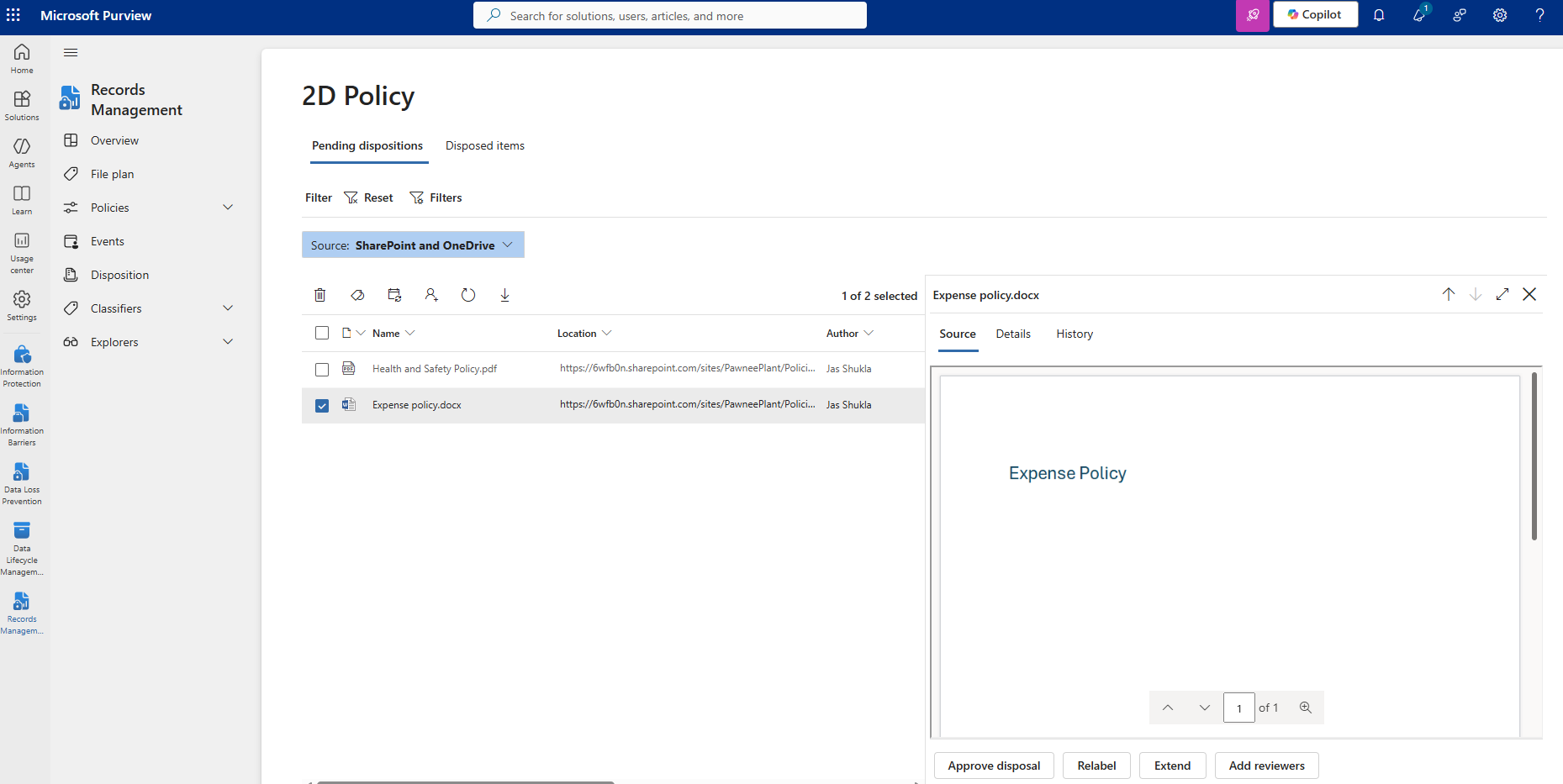
But, is this necessary? Does a human need to put their eyes on a file before it's deleted forever?
It's assumed that for for many organizations to stay compliant, the answer is yes.
However, with Purview...I'd say, it depends. The classic consulting answer, I know!
Part of the problem is we've confused two different things: inspection and accountability. More on that below.
In the paper world, a Records Manager might get a box of 500 files to check for disposition. Did they check every page of every file? Likely not. They scanned the titles and dates, opened a few folders, and sent the box on its merry way for destruction.
In the digital workplace, we've somehow adopted the expectation that every single document, chat transcript, and draft requires individual human inspection before deletion. This ends up being more work than the paper world ever was, especially now that digital information is multiplying faster than ever thanks to AI.
With most organizations I work with there are only 1-2 records managers who do disposition reviews as part of their role. And digital content grows every year, the sheer volume of this combined with too few human reviewers means that it's unrealistic to build a Purview file plan that requires a manual review for everything.
The hot take
Only critical retention labels in Purview should have a human review at the end of the cycle. Think high value contracts, important legal documents, executive decisions, etc.
The other labels (50-75% or more) should be configured to auto-delete content at the end of retention.
I hear you...auto-deleting most content is too risky, right?
I get why highly regulated organizations feel they need a human reviewer on every piece of content.
“Someone has to be responsible for disposition! Someone needs eyes on it before it disappears forever...because... just in case!”
It's a "CYA" approach, that is veiled under 'accountability' and 'risk management' in organizations.
Ok, so let's talk about accountability.
Inspection vs. accountability: the "accountability sink"
In his book The Unaccountability Machine: Why Big Systems Make Terrible Decisions and How The World Lost Its Mind, Dan Davies describes how complex systems create "accountability sinks." These are workflows where true responsibility becomes absorbed into the process itself, and nobody is actually accountable for outcomes.
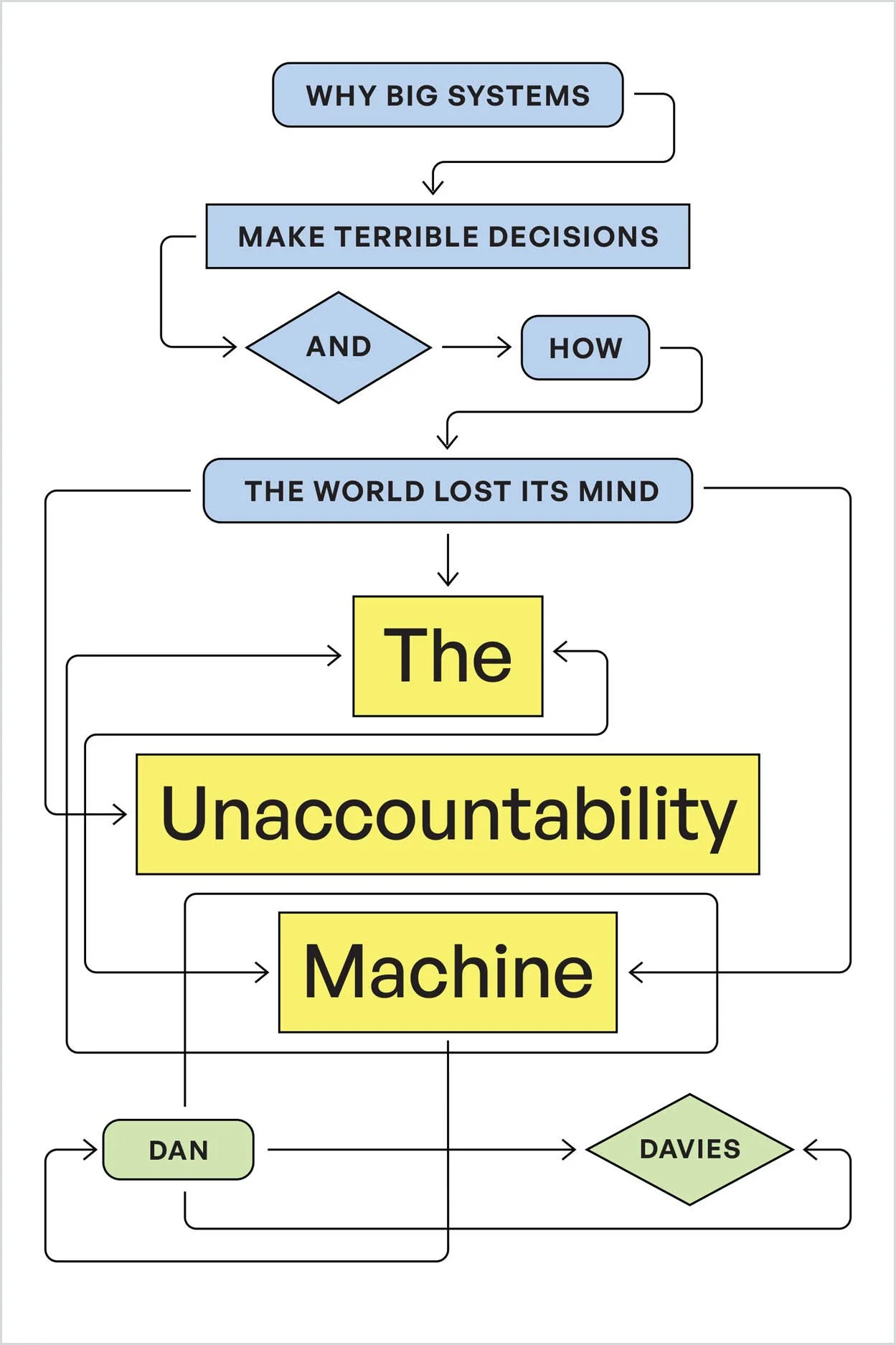
Records management often falls into this trap. When an organization demands a human sign-off on every file, it confuses inspection with accountability:
Accountability means someone takes responsibility for the disposition decision and the governance framework.
Inspection means someone manually examines every single item before it is destroyed.
When most content requires a human review before disposition, accountability for the whole records program ends up resting on one overworked Records Manager, years into a process they didn't design. That person will be staring down hundreds or thousands of items to review every month...which means they won't have the time to review any of them all that well.
Mistakes will, and do, happen.
Requiring a future reviewer to revisit every single document does not improve accountability; it only delays it. Forcing someone to click "Approve" thousands of times often signals a lack of confidence in the original retention schedule rather than true governance.
Moving accountability upstream
To build a more sustainable records management program, organizations can shift from traditional reactive inspection to upstream accountability.
Under traditional thinking, content is classified, retention is applied, and an operational reviewer is expected to decide whether to destroy it years later.
In a scalable model, accountability is exercised upfront. The team defines retention rules, tests exceptions, secures stakeholder approval, and trusts the governance framework it built. When the retention period expires, Purview deletes the content automatically.
Accountability hasn't disappeared in this model. It just lives in the approved retention schedule, the legal review during configuration, the file plan, and the governance process, instead of with someone clicking buttons years down the line.
A more sustainable framework
A scalable disposition strategy relies on a simple principle: human review should be the exception, not the default.
Here's the general Purview RM design and configuration approach I recommend:
Agree on a trusted governance framework: Keep working with decision makers on a governance framework and retention schedules for Purview until you are confident in it. "Measure twice, cut once."
Save human reviews for the high-value content: Mandatory human disposition reviews should be strictly limited to high-risk, permanent, or archival records such as litigation files, executive decisions, major contracts, and core corporate history where human judgment adds genuine value.
Auto-delete everything else: Standard administrative files, working drafts, duplicate copies, meeting recordings, and transitory content should auto-delete on expiration once the retention rules are verified and tested.
Have enough time for testing: Obvious, but worth saying: before rolling out automatic deletion for a label, test the process end-to-end. Start with a handful of sites or users and expand from there. Purview isn't fast, as it can take days to apply labels, and more time to auto-delete, so build that into your plan.
Add more Record Owners if needed: If your org still has a large volume to review, train a small, dedicated group of functional record owners in departments like Compliance, Legal, Privacy and Finance to act as disposition reviewers. Don't forget, you will need to build a process for on- and off-boarding their permissions too.
Shift records teams to exception monitoring: Records management teams can shift their focus from processing items in the queue to auditing compliance through spot-checks and periodic audit log reviews, say every month or quarter.
Closing thoughts
If your organization had to review ten times more records next year than it does today, would your disposition process still work? If the answer is no, the challenge may not be the technology, it may be the assumptions underlying the disposition process itself.
Basically: don't assume that every digital item needs a human set of eyes before it's deleted!
Reserve disposition reviews strictly for content that is truly high-value, high-risk, or subject to explicit regulatory mandates
Use automated deletion at the end of the retention period for all standard business records, after the decisions are formally documented, tested, and approved
Treat disposition review as the exception, not the rule. That's how you keep most of your Purview retention labels doing their job, instead of becoming an accountability sink.